The oud is one of the most important instruments in West Asian music, and honestly, it is one of those instruments that feels ancient the moment you hear it.

It has a deep, warm, earthy sound that immediately pulls you into another world. If you are just starting to learn oud online, one of the first things worth understanding is that the oud is not just another string instrument. It has a long history that connects Arabic music, Turkish music, Persian music, North African music, European lute music, and even part of the story of the modern guitar.
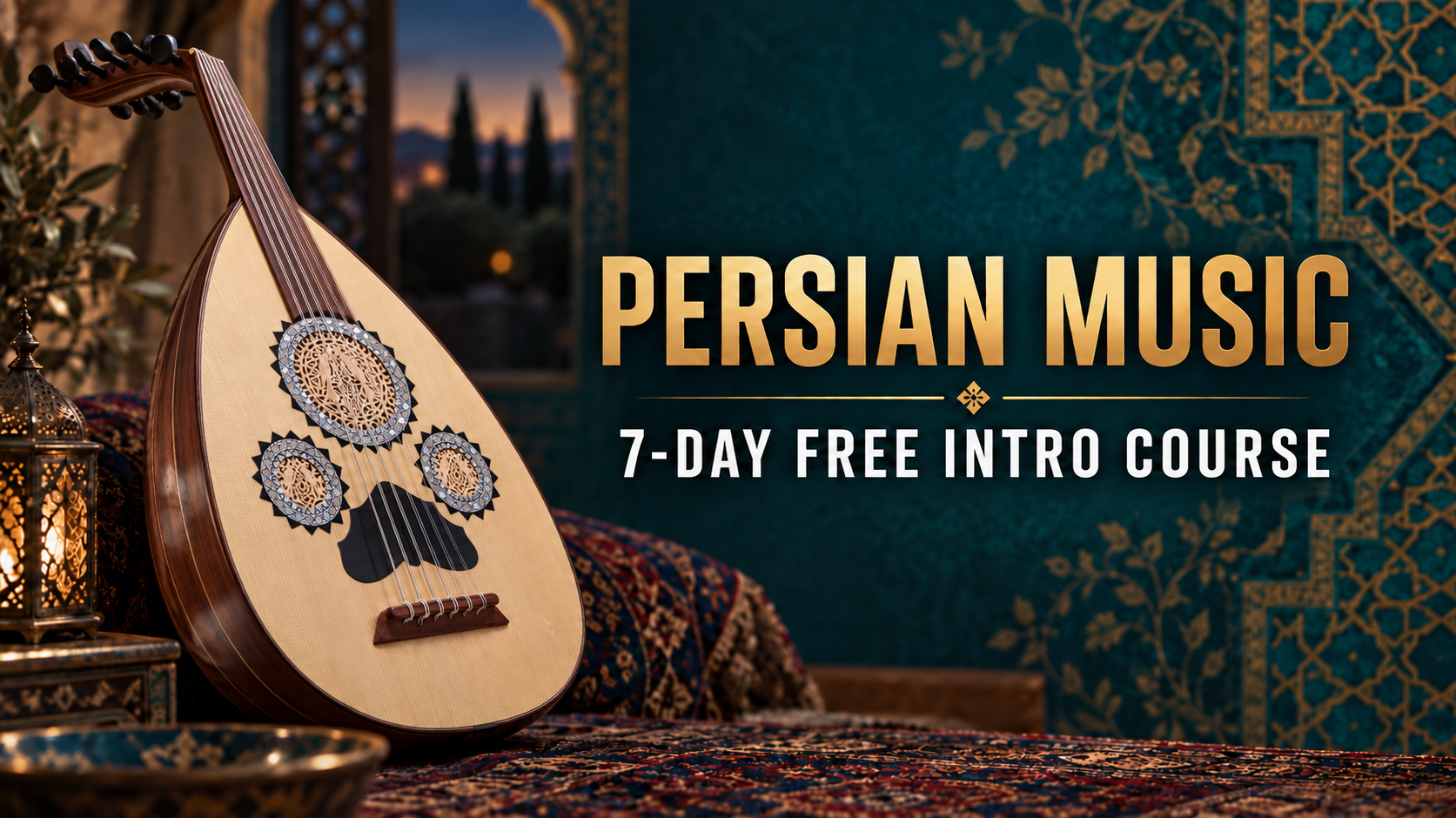
The oud has a pear-shaped body, a short neck, and no frets. That fretless fingerboard is a huge part of what gives the instrument its expressive voice. Unlike the guitar, where the frets divide the notes for you, the oud lets the player shape the pitch directly with the fingers. This makes it possible to play slides, ornaments, and subtle microtones that are essential to maqam, the modal system used in much of Arabic, Turkish, and West Asian music.
The word “oud” is often connected to the Arabic al-ʿūd, meaning “the wood.” Earlier lute-like instruments existed throughout the ancient world, including Mesopotamia, Persia, and Central Asia. Over time, these instruments developed into the oud we recognize today.
During the 6th to 13th centuries, the oud became more than a performance instrument. It was also used by major thinkers and musicians such as Al-Kindī, Al-Fārābī, and Ṣafī al-Dīn al-Urmawī to explain music theory, intervals, tuning, and modal systems. In other words, the oud was not only used to make music — it helped people understand how music worked.
One of the coolest things about the oud is how far its influence traveled. As the instrument moved through North Africa and into Andalusia, it helped shape the European lute. In fact, the word “lute” comes from al-ʿūd. The European lute later became one of the most important instruments of Renaissance music, and from that wider lute family we eventually get part of the story that leads to the modern guitar.
So when you pick up the oud, you are not just learning an instrument. You are stepping into a musical tradition that connects the Middle East, Europe, North Africa, and beyond. Whether you are interested in Arabic oud, Turkish oud, Persian music, maqam, taqsim, or simply want to understand where the guitar’s older relatives came from, the oud opens the door to a huge and beautiful musical world.
It is ancient, but it still feels completely alive today.
Ready to start learning more?
Figure out if an Arabic Oud or Turkish Oud is right for you. Read our Ultimate Oud Buyer’s Guide.
Have an Oud and ready to learn Oud online? Choose a course right here and learn Oud online.
Want to keep exploring other Oud related topics like maqam? Read all our free resources.